

Karate
How Peer Mentoring Elevates Instruction and Performance
Dec
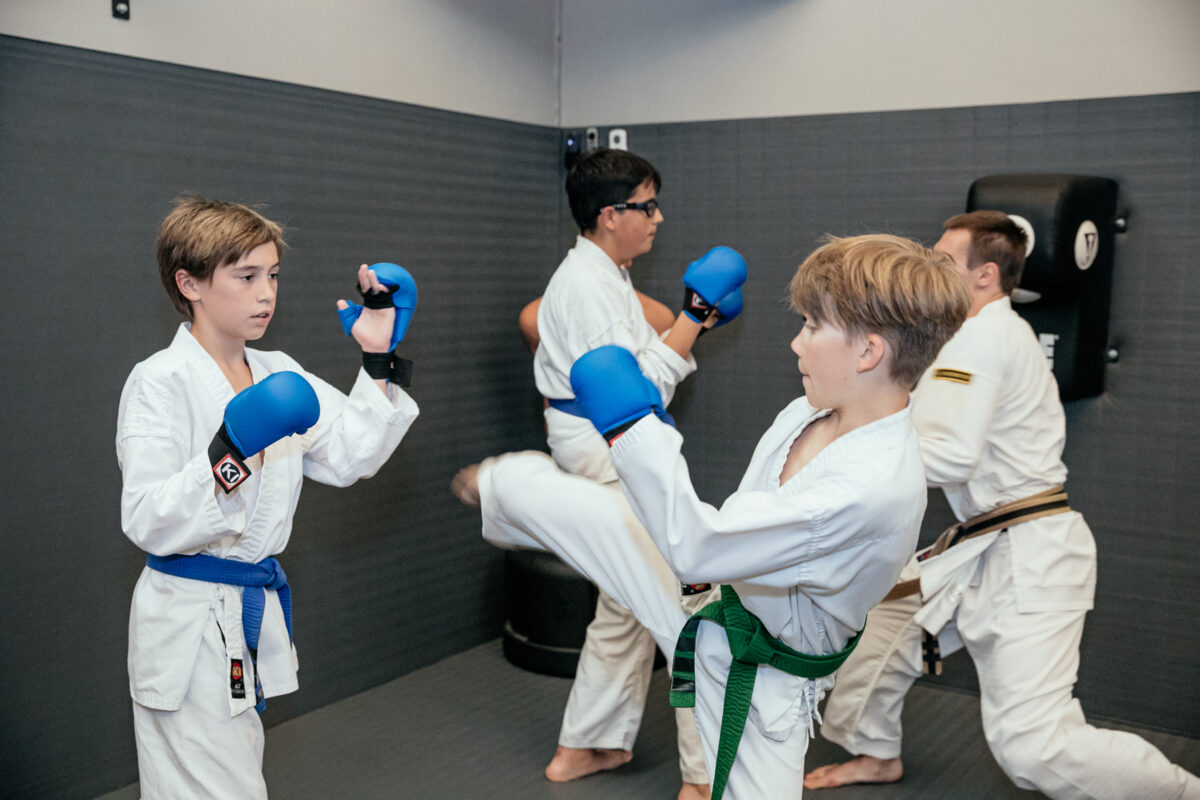
San Diego’s martial arts scene is crowded, but Practical Karate stands out by emphasizing practical, pressure-tested skills. Here, training delivers clean fundamentals, effective self-defense, and real-world readiness. A core feature is how peer mentoring elevates Instruction, and supervised student-to-student coaching that amplifies learning while maintaining quality control.
What “Practical Karate” means in a modern San Diego dojo
Karate has many expressions. Some schools emphasize tradition, forms, and rank progression. Practical Karate keeps the useful elements. It evaluates every practice with a simple question: “Does this make a student more capable?” The practical mindset typically shows up in three ways.
First, training prioritizes fundamentals that survive stress—stance, posture, guard position, hip engagement, distance management, and timing. Second, drills are pressure-tested. Students do partner exercises that progressively add resistance, unpredictability, and decision-making. Finally, Practical Karate is contextual. Students learn when to disengage, how to de-escalate, how to use voice and posture to avoid conflict, and how to apply techniques safely and proportionally.
San Diego is a natural home for that approach. A city with active outdoor culture, a strong military and first-responder presence, and a broad mix of athletic communities values training that is both disciplined and functional. Practical Karate classes here often attract students who want confidence and competence, not just belts.
Why peer mentoring works—when it is done correctly
At first glance, “peer mentoring” in martial arts can sound like a cost-saving substitute for instruction. In high-quality karate instruction, the opposite is true: peer mentoring is a performance multiplier, not a replacement for qualified teaching. The head instructor remains the primary authority on curriculum, safety, standards, and progression. Peer mentoring increases the high-quality feedback a student receives in each class.
Skill acquisition is not just about exposure; it is about correction and repetition. If a student practices a technique incorrectly for months, they do not just “fail to improve”—they may encode bad mechanics that take longer to undo than to learn correctly. Peer mentoring helps close that gap by increasing the frequency of micro-corrections: head position, foot alignment, hip angle, guard discipline, breath control, and rhythm. With trained mentors circulating through drills, students get immediate, actionable input instead of waiting for a single instructor to rotate through a room full of partners.
There is also a less obvious benefit: teaching reinforces learning. When an intermediate student is coached to explain a drill, demonstrate it clearly, and observe errors without ego, they sharpen their own fundamentals. The dojo gains not only better beginners but also more technically consistent intermediates, because mentoring forces them to embody the standard.
How peer mentoring is structured in Practical Karate
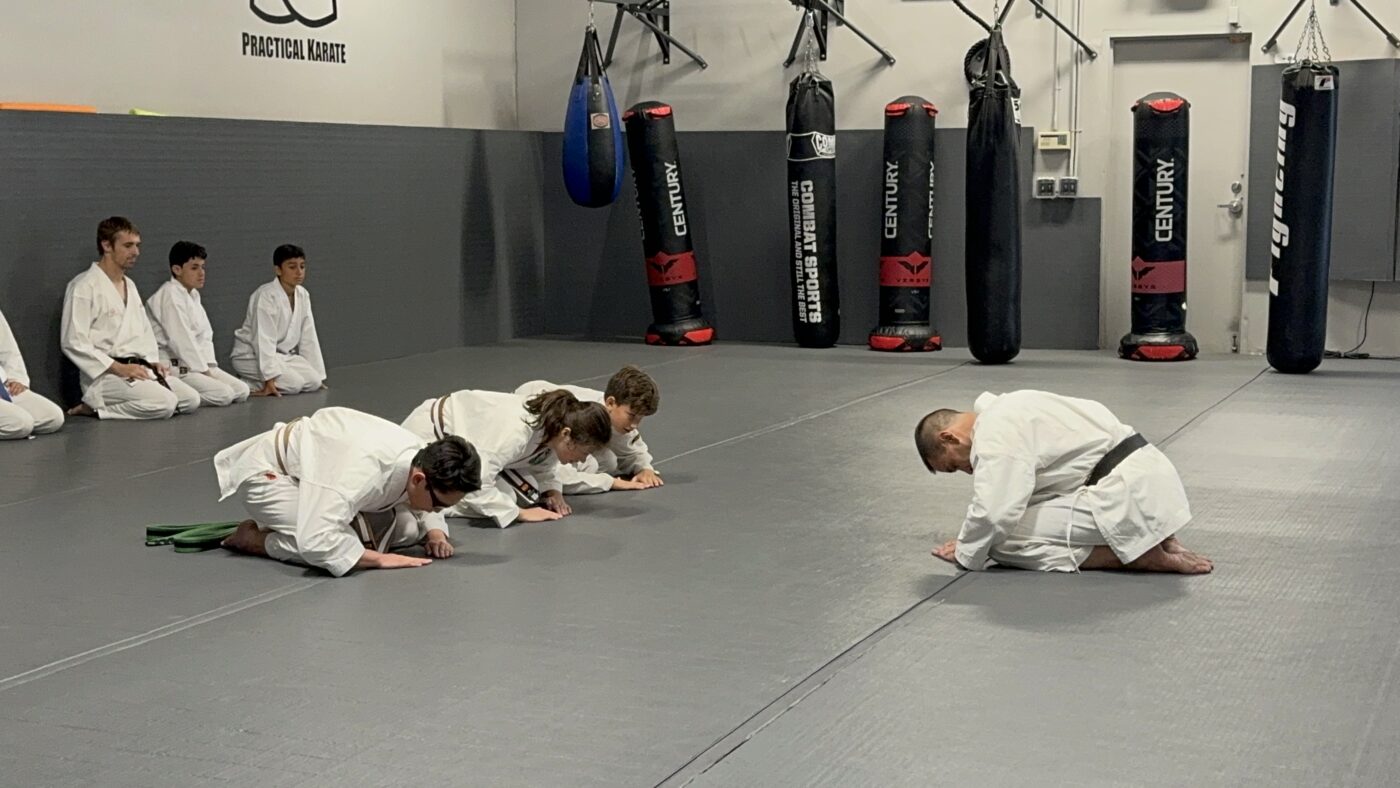
The key phrase is “structured and supervised.” Effective peer mentoring is not random advice from whoever speaks the loudest. It is a system.
1) Mentor selection is earned, not granted by rank alone
A Practical Karate program selects potential mentors through a clear process. Instructors assess movement quality, reliability, emotional control, and communication skills, not just belt color. For example, a student must demonstrate technical precision, calmness, and responsible communication in class. Athletic ability alone does not qualify someone: a strong sparrer who lacks control is not eligible, while a focused, respectful student with steady technique may be chosen to mentor. This ensures mentors are capable of guiding others effectively.
2) Mentors are trained in a consistent coaching method
The best programs teach mentors a simple feedback model: observe one priority issue, give one clear correction, and have the student repeat it immediately. This avoids “information overload,” where a beginner hears five things and changes none of them. Mentors use cues that match the school’s technical language—“chin down, eyes up,” “hands return to guard,” “step off-line,” “turn the hip, don’t lean the shoulder.” Consistency keeps standards high across a growing school.
Peer mentors might guide warm-ups, supervise basics, and support partner drills. They do not independently modify curriculum, introduce advanced techniques without authorization, or correct safety protocols beyond their role. The head instructor sets the session goals; mentors reinforce them.
3) Safety and intensity are actively managed
In Practical Karate, intensity is a tool, not a default setting. Mentors help calibrate contact levels, ensure protective gear is used properly where needed, and encourage students to train “hard enough to learn, not hard enough to get hurt.” This matters in San Diego, where many adults balance training with demanding jobs, family obligations, and outdoor sports. A peer-mentoring system that reduces avoidable injuries directly increases retention and performance over time.
Peer mentoring as a quality-control engine
The phrase “highest quality instruction” is often used loosely. At Practical Karate, quality is visible and measurable: technical consistency across students, low injury rates, students who can perform under pressure, and a culture of steady, humble learning.
Peer mentoring helps deliver that quality in several specific ways:
- Faster error correction. Beginners commonly make predictable mistakes—dropping hands during strikes, overcommitting weight, stepping too close, reaching with the head, freezing under pressure. Mentors can spot these immediately and correct them before they harden into habits.
- Higher training volume without lower standards. A class with mentoring can run more repetitions per minute because students spend less time confused or waiting. Drills flow, transitions are smoother, and the room stays productive. ot everyone struggles with the same thing. One student needs footwork; another needs breathing and relaxation; another needs confidence and permission to move. Mentors provide tailored support while the instructor maintains a clear macro-level plan.
- Culture of accountability. When students know they may become mentors, they take fundamentals seriously. Standards rise because everyone recognizes that “good enough for me” is not good enough if someone else will copy it.
Why San Diego students respond especially well to mentoring
Practical Karate appeals to people who value competence and community. Peer mentoring strengthens both. San Diego is filled with transplants, military families, and people building new local networks; a dojo with structured mentorship offers a sense of belonging without sacrificing professionalism. Beginners feel supported rather than judged. Intermediate students feel entrusted with responsibility. Advanced students develop leadership that extends beyond technique.
Mentoring also supports performance outcomes for those who compete, whether in karate rule sets or broader formats, because it increases the number of training interactions where decision-making is coached in real time. Competitive performance is not only athletic; it is tactical. Mentors help students troubleshoot timing, distance, feints, angles, and composure, turning sparring rounds into deliberate practice instead of chaotic brawling.
The result: better students, better instructors, better dojo
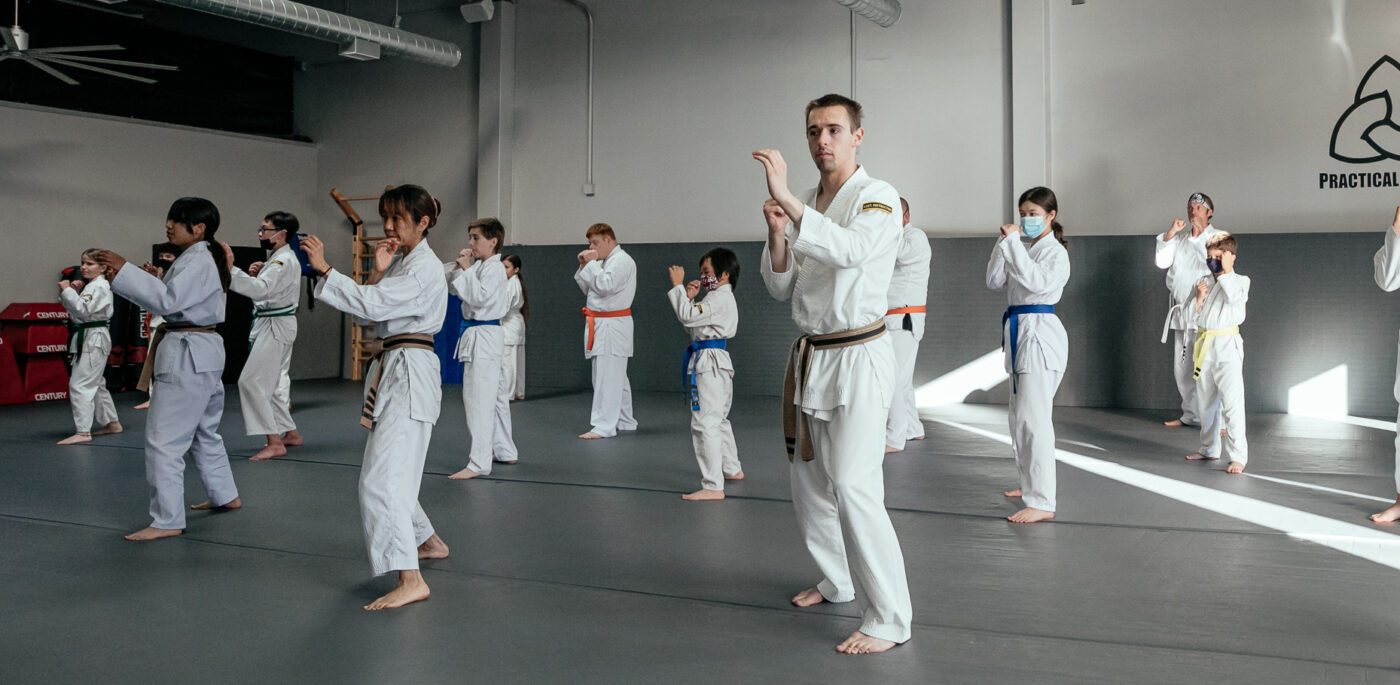
A Practical Karate school that uses peer mentoring effectively creates a reinforcing loop. Beginners learn faster and more safely. Intermediates sharpen their fundamentals by teaching them. Advanced students and instructors spend less time correcting avoidable basics and more time refining higher-level skills. The overall technical floor rises, which elevates sparring quality, kata performance when practiced, and self-defense competence.
In San Diego’s Practical Karate community, the best programs understand that “quality instruction” is not just a function of one talented instructor. It is a system: clear standards, pressure-tested drills, strong safety culture, and a mentoring pipeline that turns capable students into responsible leaders. When done correctly, peer mentoring is not informal help; it is a strategic, structured method for producing consistently high performance across the entire dojo.
As you assess karate schools in San Diego, watch for evidence that peer mentoring is a disciplined method, not just marketing, look for these markers on the training floor:
